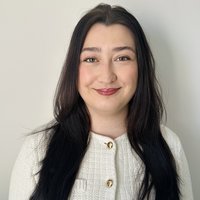
Communication and media graduate Sophia discusses her experience as a disabled student and her current role as a digital content officer at the Universities Superannuation Scheme (USS)
Why did you choose this course and university?
I decided to study the BA Communication and Media (with a year in industry) at the University of Liverpool because I really enjoyed media studies at A-level and wanted to explore it further.
I was particularly drawn to the idea of developing a critical understanding of our media-dominated world and being empowered to analyse what I saw in:
film
politics
social media
television.
I am also a huge film fan and have always been fascinated by storytelling and the different ways powerful stories can be told across media. Staying in Liverpool meant I could live at home, save money, and access the support of my existing network, which was important to me as a disabled student.
Overall, the course and the university felt like a good academic and personal fit.
Did you request any support from the university related to your disability?
In my first year, I had an appointment with the university's disabled student support team. They helped me understand the steps to access the support I needed to succeed as a disabled student.
This included applying for my Disabled Students' Allowances (DSA) and learning how to secure extenuating circumstances when my disability affected my ability to do university work.
Did any specific adjustments make a difference to how well you felt able to perform at university?
The most significant adjustment for me was being able to complete exams on a computer. I have Charcot-Marie-Tooth (CMT) disease, so for my particular needs, typing rather than handwriting made an enormous difference. I genuinely don't think I would have achieved the same academic outcomes without this adjustment in place. Having the right support allowed me to demonstrate my knowledge fairly and confidently.
What was your overall university experience like?
Overall, I really enjoyed it. I made lifelong friends and loved my course and lecturers, some of whom I am still in touch with today.
There are moments when I wonder whether I missed out by not moving away and having what is often described as the 'full' university experience. However, I strongly believe that the choices I made were the right ones for me at the time, and I would not be where I am today - or who I am today - without them.
Did you receive any further support from the university or other organisations?
I had a brilliant academic adviser who always encouraged me to excel and go after opportunities. She helped me secure my communication and public relations internship at Liverpool John Lennon Airport, and I was the first communication and media student to do the year in industry.
Briefly tell us what you've been doing since graduation.
I graduated during the height of the COVID-19 pandemic, which made the first year after university extremely challenging, particularly given the limited number of entry-level opportunities available. As a disabled graduate, this uncertainty was especially difficult to navigate.
Despite this, I secured a role as a marketing officer at SupplyWell, an education technology company, where I worked for four years. I then moved to another ed‑tech organisation, EdenFiftyOne, where I discovered a real passion for websites and digital content.
I am now working as a digital content officer at USS, and I genuinely love what I do.
Why did you decide to pursue a career in this industry?
I enjoy problem solving, simplifying things for people, and telling great stories. I get to do all of this and more in my current role.
I hope to deepen my understanding of digital accessibility so I can become a digital accessibility specialist.
What are the main duties in your current role?
Delivering accessible and accurate digital content as part of the USS digital team, supporting member-facing platforms and internal stakeholders. I work with the content management system (CMS) and accessibility standards, and I'm supporting a large-scale digital transformation project.
When you received a job offer, did you discuss any workplace adjustments before or after starting? What happened, and what was helpful?
I discussed this on my first day. My workplace was keen to support me in any way they could, which significantly improved my comfort level as I settled into the role.
How did you approach finding a job?
The usual places like LinkedIn and Indeed. I also visited Evenbreak, the job board for disabled candidates and read their weekly newsletter.
What are your long-term career ambitions?
I hope to continue developing my skills in digital content, with a long‑term goal of branching into user experience (UX) and design. I'm particularly keen to upskill in digital accessibility, as it is important to me that I help remove the barriers disabled people continue to face online. Ultimately, I would love to specialise in this area.
What advice would you give to others about disclosing a disability?
Disclose your disability when you feel comfortable doing so. Everyone's experience is different, so it's important to do what feels right for you. You shouldn't have to disclose if you don't want to, but if you do, that's great.
Don't be afraid to ask for reasonable adjustments. It is your right, and your employer will do all they can to support you in doing your job.
Be organised with your job applications. This will help reduce overwhelm, saving you time and energy in the long run. For example, I had a spreadsheet where I colour-coded vacancies by application stage: blue was 'need to apply', green was 'waiting/applied', yellow was 'invited to interview', red was 'rejected', and purple was 'success'. This helped me have a visual understanding of where I was in my job hunt, but you could adapt it to suit you.
Get plenty of sleep during the application period. I was so fatigued when I was job hunting, as it is mentally and physically exhausting. Sleep will help you clear your head and create better applications. Drink lots of water, too.