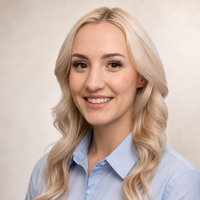
Sydney spent her gap year living in Belgium as part of an international exchange programme. She is now the founder of a software company and technical advisor to a medtech startup
What made you choose to take a gap year?
I had completed my high school education and was taking a break to expand my perspective before starting university to study a BA in neuroscience.
I wanted to build independence and cultural adaptability before facing the demands of university coursework, as I knew my expectations for myself academically were extremely high.
Taking a year to live in a completely new environment allowed me to gain real-world experience and learn a new language. I knew the science fields I planned to enter would require intense focus later on. Taking time away from the traditional classroom gave me the space to mature and develop resilience. I wanted to immerse myself in a foreign culture to understand different ways of living and problem solving.
How did you decide what to do?
I selected the AFS Exchange Programme in Flemish-speaking Belgium because it offered full immersion. I wanted a language challenge and a location centrally located in Europe.
My long-term goals involved building the skills to learn scientific subjects in a new language. Living in Belgium provided a strong foundation for understanding European markets and cultural nuances while still maintaining a competitive educational standing, as I was also attending high school in Belgium.
This experience directly supported my later decisions, like:
interning for a Summer in Dublin, London, and Madrid
participating in a medical fellowship in Serbia
preparing to study abroad in Germany through my undergraduate university.
The experience taught me to adapt quickly to unfamiliar situations, a skill that translates directly to my day-to-day work as a technical founder.
How did you fund your gap year?
I combined personal savings with programme scholarships offered through AFS. I spent the years prior working part time to build a financial safety net for travel expenses. My family provided support for the base programme fees. I strictly budgeted my monthly allowance to cover independent excursions and daily expenses while living with my Belgian host family.
What did you do during your gap year?
I spent the school year living with a Belgian host family and attending a local Flemish high school:
adapting my vegetarian diet to local cuisine, finding ways to enjoy the food culture while maintaining my dietary restrictions
immersing myself in the language and local customs
travelling extensively throughout Belgium and neighboring countries.
Since returning, I have continued volunteering as an AFS returnee to assist new students preparing for their own time abroad.
What was a typical day or week like for you?
I spent the morning and early afternoon attending classes taught entirely in Dutch.
Navigating subjects like history and science in a new language required immense concentration and self-determination.
After school, I participated in local sports and spent time socialising with classmates at cafes around Brugge and Ghent. Evenings were dedicated to family dinners with my host family.
Weekends involved:
attending community events with my host family members
exploring nearby cities by train
visiting museums.
I often spent Sundays writing updates for friends and family back in the United States and posting a weekly YouTube blog which eventually covered the entire year.
What were the biggest challenges you faced during your gap year?
The language barrier was the most significant hurdle during the first few months. Attempting to follow rapid Flemish conversations left me feeling isolated initially. I dealt with this by forcing myself to participate in conversations even when making mistakes. I referred to Google Translate every few minutes and asked endless questions to my school friends.
Another challenge was navigating my vegetarian diet in a culture heavily focused on meat dishes. I communicated clearly with my host family about my avoidance of meat for health reasons. We collaborated on meals, and I learned to cook traditional dishes using alternative ingredients alongside my host parents.
What skills did you develop during your gap year?
I became fluent in Dutch and improved my non-verbal and cross-cultural communication skills.
I developed adaptability and learned to operate comfortably outside my comfort zone.
I improved my problem-solving abilities by navigating foreign public transport and planning my daily logistics.
These interpersonal skills are essential in my current role managing a startup team and coordinating with international clients. The resilience I built in Belgium translates directly to troubleshooting code in Python or SQL when developing Software as a Service (SaaS) platforms.
How has your gap year influenced your career plans or study choices?
My time in Belgium solidified my desire to work for myself one day. It heavily influenced my decision to pursue degrees combining data and journalism to understand global narratives and eventually build the experience that informs my business decisions today.
The experience gave me the confidence to manage challenging operations and launch StatusBird LLC, a software-as-a-service platform that provides e-commerce and third-party service monitoring.
It also prepared me for my recent relocation to London. The independence I gained during my gap year made me comfortable making large-scale decisions regarding my career trajectory and business investments, while also balancing my love for travel.
Are there any common misconceptions about gap years you'd like to challenge?
Many people believe taking time off delays professional progress. I completely disagree. A gap year accelerates personal growth and maturity. The experiences gained abroad provide a unique perspective highly valued in academic and professional settings.
Another misconception is the idea of a gap year being a long vacation. True immersion programmes require intense mental effort and continuous learning. Integrating into a new culture is exhausting work requiring daily dedication. I was taking human anatomy tests in Dutch!
What advice would you give to someone considering a gap year?
Don't worry about falling behind your peers; instead, fully immerse yourself in the local culture, embrace the challenges of being a beginner, and say yes to new opportunities.
Keep an open mind, document your experiences, and allow the year to shape your personal growth and future ambitions.
Set clear goals for your gap year and choose an experience that pushes you beyond your comfort zone.