What degree did you study?
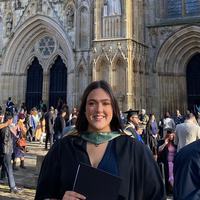
I have also just completed the MProf/MSc Rural Estate and Land Management at Harper Adams University. I studied this course part time, alongside my role.
How did you get your surveying job?
I started working for my firm as an agricultural business adviser after finishing my postgraduate degree in international business.
After being in that role for six months, my manager encouraged me to enrol on the MProf at Harper Adams on the apprentice route to becoming an RICS Accredited Rural Surveyor and Agricultural Valuer.
How relevant is your degree to your rural surveying career?
I use my economics degree every day in my role. My understanding of domestic and international markets helps me interpret changes in agricultural commodity prices and land values, supporting well-informed advice and valuation work.
I apply my understanding of business finance to review balance sheets and farm accounts, and my understanding of taxation is particularly relevant when supporting asset valuations for tax purposes. The degree has given me strong numerical and analytical skills, which are essential in my day-to-day work, and provide a solid foundation for my ongoing postgraduate study.
What's a typical working day like in rural surveying?
My time is split between being out on farms with clients and being back in the office. I usually try to get site visits done in the mornings, which can take me anywhere across South, West or North Yorkshire.
At the moment, I'm doing a lot of government grant and agri-environment scheme work, helping farmers apply for funding for diversification and alternative income streams. This involves looking at how their business is currently performing, what it could look like with a new income stream, and then matching that to what funding is available.
I'll then head back to the office, and support the wider team with tasks such as preparing plans, drafting tenancy agreements and assisting with valuations.
What do you enjoy most about your job?
The variety in my role is enjoyable, and I also really value the relationships I build with clients. It's a very personal role and you often work closely with people and families over long periods of time. In addition, I enjoy being part of a supportive team and learning from my colleagues, as well as the clear progression opportunities within the profession.
What are the challenges in your surveying role?
The main challenge is balancing full-time work with my studies, while maintaining a healthy work/life balance. It can be demanding to manage competing deadlines, responsibilities, and coursework. However, I know this is only a short-term challenge, and that the experience and qualifications I am gaining will be worthwhile in the long term.
Where do you hope to be in five years?
In five years' time, I hope to be a fully qualified RICS Chartered Surveyor. I want to continue developing my knowledge and experience, while building on the strong client relationships I'm starting to form. Long term, I aim to be in a position where I'm trusted by clients and consistently delivering high-quality advice, while still continuing to learn and progress within my career.
What advice can you give to others?
Be open to applying for jobs you may not have previously considered. There are often more opportunities out there than you initially expect, and it’s worth exploring different career paths.
When job hunting, don’t overlook smaller firms. While larger, well-known companies can be appealing, smaller firms often offer broader experience, greater responsibility, and a more supportive environment where you are treated as an individual rather than just a number.
Find out more