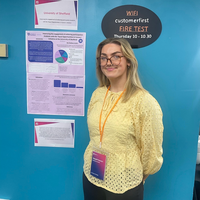
Sociology with social policy student - Abi Pearson
Final-year sociology with social policy student Abi discusses her course, the range of extra-curricular activities she has been involved with at the University of Sheffield and the skills she's gained from volunteering
Why did you choose this course and university?
Having never studied sociology before, I thought it would be an interesting combination of my A-level subjects (philosophy, psychology and English literature) as I enjoyed each of these thoroughly.
I studied pure sociology in my first year, and at the end of the year, I switched to the BA Sociology with Social Policy (with a placement year) because of the passion I discovered for policy.
Similarly, the University of Sheffield felt like a combination of everything I wanted from a city. Coming from the Lake District, I really appreciated that Sheffield was very green and felt like home in a way - this was particularly comforting in my first year.
I also chose the university as it has an award-winning students' union (SU). I had been involved with many extra-curricular activities at school and wanted to find a way to continue the things I love at university.
How did you find the application process?
My application was relatively straightforward, aside from the fact that I applied through UCAS Extra after a last-minute change of heart and decided to study sociology instead of politics and international relations.
Despite the stress of it being relatively late on, I got the offer through really quickly after applying, which really put my mind at ease during my A-levels.
How is the course structured and assessed?
As mentioned, I had never studied sociology prior to university, but the department is acutely aware that this is the case for many students and structures the first year to build an equal foundation of understanding for all students, regardless of educational background.
The second year is structured so that students can begin to refine their interests, becoming ready for the third year, when we undertake a dissertation based on their area of interest. This meant that I felt suitably able to complete my dissertation when it came to it, having had plenty of time to prepare and consider the research areas I liked.
The course is mainly assessed through a mixture of essays and coursework, including:
group projects
podcasts
posters.
What are your interests outside of your course? Have you been part of any clubs or societies?
I've been lucky enough to be involved with many extra-curricular activities during my time at university, including:
being vice president of the Sociology Society and a student mentor
Can you tell us about your volunteering experience?
I have volunteered with ANTS for all four years of my degree and have been project lead for more than two years. ANTS provides activity days for bereaved children across the Sheffield region between the ages of eight and 12, allowing them the opportunity to meet other bereaved children and provide respite to parents and carers.
The role has involved:
being in charge of session planning
collecting consent forms
completing risk assessments and gathering referrals from schools and social services
managing a team of around 15 volunteers
taking responsibility for more than 20 children at a time.
Despite the range of responsibilities, leading the ANTS project has been an absolute pleasure and an aspect of university that I will really miss.
What skills have you gained from your volunteering?
I have benefited from volunteering professionally and personally more than from any other activity I have been involved in at university. The skills I have gained include:
Communication - with volunteers I delegate tasks to, other project leaders I share workloads with and the children I directly work with.
Conflict resolution - children often face behavioural difficulties resulting from their bereavements, which often means that kids act out with each other or volunteers. As the project leader, I have taken responsibility for resolving any conflicts that arise and adapting situations to ensure all kids enjoy themselves.
Leadership - as one of the longest-serving volunteers on the programme, I often know the most about operational and administrative aspects of the charity that I take a lead on. In leading the volunteers, I have also learned how to support them to get the most out of sessions and sufficiently support children.
Time management - we often take the kids outside the SU for activities or work with student societies, and so I have developed strong time management skills to ensure all sessions run smoothly.
How have you managed your finances as a student? Have you had a student job?
I have always worked as a student to support my finances. I worked pub jobs at home during vacation times in my first year, privately tutored English in my second year, completed a paid placement year in my third year and currently work for the Careers & Employability team on a part-time basis in my fourth year.
What's your overall university experience been like? What have been the highlights?
My experience has been the best four years of my life. I've been presented with so many opportunities and have truly enjoyed getting stuck into as many aspects of university life as possible. Some of my highlights include:
being a student ambassador and getting to talk about my experiences to prospective students on open days
completing a charity hitchhike from Sheffield to Belgrade in my final year
doing a placement year, working with Careers and Access in widening participation
taking part in the Sheffield Undergraduate Research Experience (SURE) and subsequently presenting my project at the British Conference of Undergraduate Research (BCUR) and the International Conference of Undergraduate Research (ICUR)
volunteering with ANTS and watching the kids grow over four years.
Briefly tell us about your plans for after graduation.
I'm planning to complete a Masters in social research, but will be doing some travelling around Europe and South America in the summer before this.
What are your longer-term career ambitions?
My long-term ambition is to go into research. I want to complete a PhD after my Masters, specifically in education policy and improving international access to education for children. This is inspired by all my university experiences.
What tips would you give to others thinking about going to university?
Volunteer when you have the time. Make yourself a part of the wider city community.
Ask for support if you need it. There are so many teams at the university that are there to help you and genuinely want you to succeed.
Throw yourself into as many experiences as possible. University life has so much to offer.
Find out more
Get some inspiration on volunteering at university.